New ACSM Resistance Training Guidelines: What They Mean for Your Workouts
The American College of Sports Medicine (ACSM) recently released its updated 2026 Resistance Training Guidelines, marking the first major update in 17 years. These guidelines summarize findings from 137 scientific reviews representing more than 30,000 participants, making them one of the most comprehensive analyses of resistance training research to date.
The biggest takeaway? Consistency matters more than complexity.
For most adults, the largest health and performance benefits come from moving from no resistance training to regular resistance training — regardless of the specific style or equipment used.
In this post, we'll break down what the new guidelines say about strength training and what they mean for your workouts.
The most important factor: consistency
One of the clearest conclusions from the ACSM Position Stand is that the most meaningful improvements in strength, muscle growth, and physical performance come from consistently engaging in resistance training.
According to the researchers, many people get caught up searching for the "perfect" workout program. However, the evidence suggests something much simpler: the best program is the one you can stick with.
Training all major muscle groups at least twice per week was identified as an important benchmark for improving strength and maintaining muscle throughout adulthood.
One program does not fit everyone
Another key takeaway from the updated guidelines is that effective resistance training programs should be individualized.
Factors such as personal goals, exercise experience, schedule, and preferences all influence what type of program someone can realistically maintain long term.
If a training plan is too complicated, time-consuming, or difficult to sustain, it becomes less effective because consistency drops. Instead, programs should prioritize enjoyment, safety, and long-term adherence.
Adjusting training for different goals
While consistency is the foundation, training variables can be adjusted depending on the goal.
For strength
Heavier loads (about 80% of one-repetition maximum) performed for 2–3 sets per exercise tend to be effective for improving strength.
For muscle growth (hypertrophy)
Higher weekly training volume — approximately 10 sets per muscle group per week — supports muscle growth.
For power
Moderate loads (30–70% of one-repetition maximum) combined with fast, explosive movements during the lifting phase can help develop power.
The important takeaway is that many different training approaches can produce meaningful results.
Strength training doesn't require a traditional gym
Another finding from the ACSM review is that effective resistance training doesn't require traditional gym equipment. Research shows that methods such as bodyweight exercises, resistance bands, and home-based workouts can all produce improvements in strength, muscle size, and physical function when performed consistently.
This reinforces the idea that accessible, efficient training options can still deliver powerful results.
Advanced techniques are often optional
The researchers also found that many popular training strategies are not essential for general health and fitness. Techniques like training to complete muscle failure, complex periodization systems, and specific equipment types (machines vs. free weights) did not consistently produce superior outcomes for the average healthy adult.
Instead, simple, structured resistance training performed regularly is enough to produce significant benefits.
How EMS training supports consistent strength training
One of the biggest themes of the ACSM guidelines is that efficiency and consistency drive results. This is where EMS training at E20 fits naturally into an effective strength training routine.
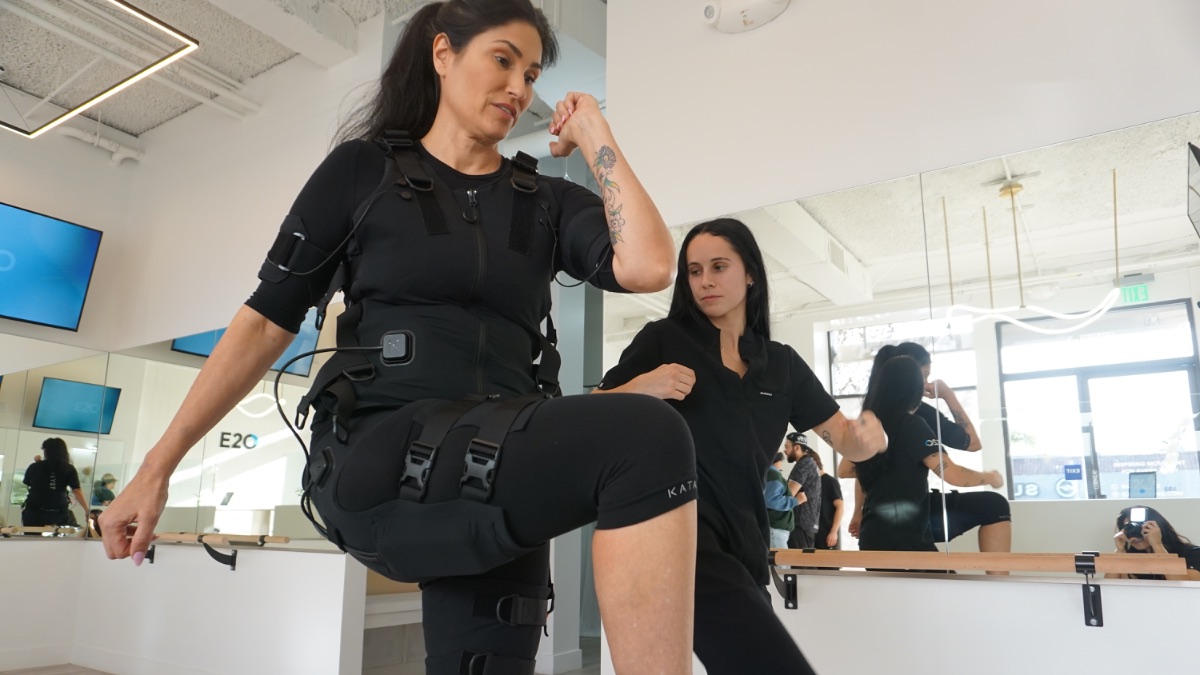
At E20 Training, our coaches use Electro Muscle Stimulation (EMS) to enhance traditional strength training by recruiting multiple major muscle groups simultaneously. This allows members to perform guided movements while experiencing increased muscle activation, helping maximize the effectiveness of each session.
Because EMS sessions are structured, time-efficient, and coach-guided, they can help make resistance training more approachable and easier to maintain consistently — which the ACSM guidelines emphasize as the key to long-term results.
Key takeaways
- The biggest health and performance benefits come from consistent participation in resistance training.
- Programs should be individualized based on goals, preferences, and sustainability.
- Different training approaches can support different goals such as strength, muscle growth, or power.
- Traditional gym equipment is not required to see meaningful improvements in strength and physical function.
- Many advanced training techniques are optional for the average healthy adult.
Ultimately, the research highlights a simple but powerful message: consistent strength training is one of the most effective ways to support long-term health and physical performance.
Source
- American College of Sports Medicine (2026). "Resistance Training Prescription for Muscle Function, Hypertrophy, and Physical Performance in Healthy Adults: An Overview of Reviews," published in Medicine & Science in Sports & Exercise®.
Train consistently, the efficient way.
Twenty minutes, coached one-on-one, built around you. See what total muscle activation feels like.
Book Your First Session